When planning a small bathroom remodel, it’s essential to understand how long the entire process will take. Typically, you can expect it to last between two to four weeks, but several factors can influence this timeline. From the scope of your remodel to potential delays, each element plays a role in how smoothly your project progresses. Let’s explore the key aspects that can impact your remodel’s duration.
Key Takeaways
- A small bathroom remodel typically takes 2 to 4 weeks, depending on the complexity of the project and contractor availability.
- Demolition phase usually lasts a few days, while installation can vary and may require flexibility in the timeline.
- Unexpected delays, such as supply chain issues or labor availability, can extend the overall remodel duration.
- Regular communication with contractors is essential to stay aligned on progress and address any potential setbacks promptly.
- Setting realistic timelines and building in extra time for contingencies will help ensure a smoother remodeling experience.
Understanding the Scope of Your Remodel
Before diving into your small bathroom remodel, it’s crucial to understand the scope of the project.
Start by evaluating your budget considerations; know how much you can spend without breaking the bank. This helps in determining the materials and fixtures you can afford.
Next, outline your design preferences—think about style, color schemes, and layout. Consider how these choices will affect both the functionality and aesthetic appeal of your space.
Factors That Affect Timeline
When planning your small bathroom remodel, several factors can impact the timeline.
The complexity of your project scope can lead to delays, especially if unexpected issues arise.
Additionally, contractor availability can affect when your remodel actually begins and progresses.
Project Scope Complexity
Although a small bathroom remodel might seem straightforward, the complexity of the project scope can greatly influence the timeline.
When you’re designing layouts, every detail matters, from fixture placement to storage solutions. If you’re making significant changes, like relocating plumbing or electrical systems, this can extend the timeline considerably.
Additionally, budget considerations play a critical role. If you’re working with a tight budget, you might opt for more affordable materials or simpler designs, which could streamline the process.
On the other hand, high-end finishes and custom solutions may require more time and careful planning, impacting your overall project duration.
Contractor Availability Issues
The timeline for your small bathroom remodel can be greatly affected by contractor availability. When contractors are busy with multiple projects, their schedules can lead to delays.
It’s crucial to communicate openly with your contractor about their availability and any potential conflicts. Understanding their timelines allows you to plan accordingly and avoid surprises.
Additionally, if you have specific deadlines, express these upfront. Good contractor communication guarantees that everyone is on the same page, making it easier to adjust schedules as needed.
Ultimately, proactive discussions about contractor availability can keep your remodel on track and minimize delays.
Planning and Design Phase
Before diving into your small bathroom remodel, you’ll want to focus on the planning and design phase, as it sets the foundation for the entire project.
Start by gathering design inspiration from magazines, websites, or social media to visualize your dream space. Consider how you’ll use the bathroom and prioritize functional features.
Next, outline your budget considerations, factoring in materials, labor, and potential unexpected costs. Having a clear budget will help you make informed decisions and avoid overspending.
Once you have your design and budget in place, you’ll be ready to move forward with confidence into the next steps of your remodel.
Demolition Process
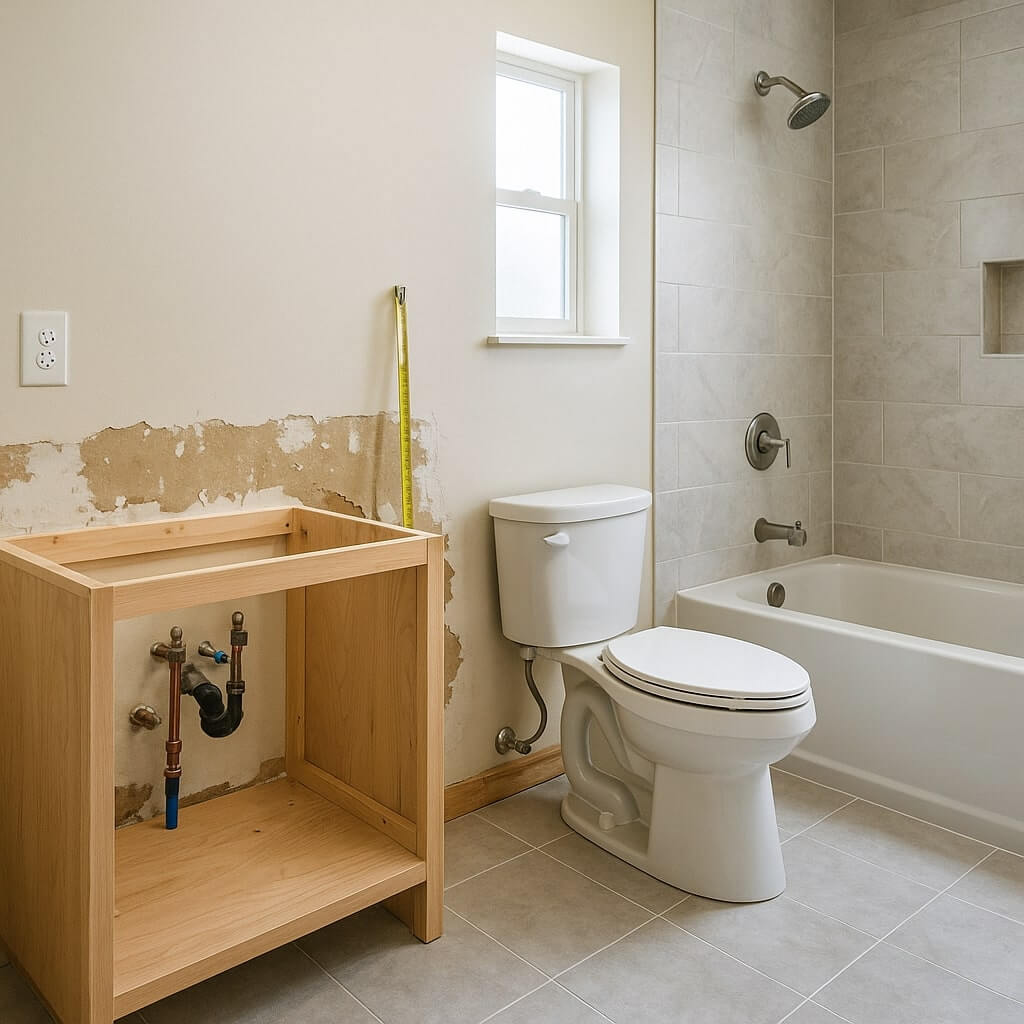
One essential step in your small bathroom remodel is the demolition process, which typically takes a few days to complete.
You’ll need to choose appropriate demolition methods, such as manual removal or power tools, depending on your project’s scale. Start by removing fixtures, tiles, and cabinetry, ensuring you wear safety gear throughout.
After tearing everything out, focus on debris disposal. Renting a dumpster or using a local waste service can simplify this task. Proper disposal not only keeps your workspace clean but also adheres to local regulations.
Focus on debris disposal after demolition; renting a dumpster simplifies cleanup and ensures compliance with local regulations.
Once demolition is complete, you’ll be ready to move on to the next phase of your remodel.
Plumbing and Electrical Work
After completing the demolition process, it’s time to tackle plumbing and electrical work, which are vital for your bathroom’s functionality.
First, make certain you secure the necessary plumbing permits before starting any major updates. This step helps you avoid fines and guarantees compliance with local codes.
Next, focus on the electrical work, as proper wiring is essential for safety and efficiency. Schedule electrical inspections to confirm everything meets regulations.
With these tasks completed, you’ll set a strong foundation for your remodel, making sure your new bathroom operates smoothly and safely.
Prioritize these elements to keep your project on track.
Installation of Fixtures and Finishes
Now that the plumbing and electrical work is complete, it’s time to focus on the installation of fixtures and finishes.
You’ll want to carefully select your fixtures, as this can greatly impact the overall look and functionality of your bathroom.
Keep in mind that the timeline for installation can vary, and those finishing touches are essential for achieving a polished final result.
Fixture Selection Process
Choosing the right fixtures and finishes is essential for achieving your ideal small bathroom remodel. Start by exploring various fixture styles, such as modern, traditional, or eclectic, to find what resonates with your vision.
Keep budget factors in mind; select fixtures that fit your financial plan without sacrificing quality. Compare prices and materials, ensuring you’re making informed choices that enhance both aesthetics and functionality.
Don’t forget to reflect on the scale of your space; oversized fixtures can overwhelm a small bathroom. By balancing style and budget, you’ll create a cohesive look that meets your needs while staying within your limits.
Timeline for Installation
Finalizing your fixture selection sets the stage for the next phase: installation.
Understanding the installation timeline helps you track project milestones and guarantees a smooth remodel. Here’s what you can expect during this phase:
- Demolition: Remove old fixtures and prepare the space.
- Plumbing & Electrical: Update necessary systems to accommodate new fixtures.
- Fixture Installation: Install sinks, toilets, and showers.
- Finishing Touches: Apply finishes like paint and caulk.
Each step typically takes a few days, so stay flexible.
Communicate with your contractor to guarantee everything aligns with your project timeline and expectations.
Finishing Touches Importance
The finishing touches in your small bathroom remodel are essential for achieving a polished look and functionality. Installing fixtures like faucets, mirrors, and lighting can dramatically enhance the space.
Choose color schemes that complement your overall design, ensuring they create aesthetic balance. For example, a neutral palette with bold accents can make a small bathroom feel inviting and spacious.
Don’t overlook the importance of hardware; it can tie your design together.
Finally, adding decorative elements like towels or plants can bring warmth and personality. These details make your bathroom not just functional but also a space you’ll love to use.
Drying and Curing Times
While you might be enthusiastic to see your small bathroom remodel come together, understanding drying and curing times is essential for ensuring a quality finish.
Rushing these processes can lead to issues like cracking or peeling. Here’s what you need to keep in mind:
- Paint drying times typically range from 1-4 hours.
- Tile adhesive curing times can take 24-48 hours.
- Grout drying times usually require at least 24 hours before exposure to water.
- Sealant curing times can take up to 72 hours.
Final Touches and Cleanup
Once the drying and curing times are behind you, it’s time to focus on the final touches and cleanup for your small bathroom remodel.
Start with a thorough final cleaning to remove dust, debris, and any leftover materials. Wipe down surfaces, clean fixtures, and make certain everything sparkles.
Next, conduct your last inspections to confirm all installations are secure and functioning properly. Check for any paint touch-ups needed or minor adjustments to hardware. This step is essential for achieving that polished look you’re aiming for.
Once you’re satisfied, your newly remodeled bathroom will be ready for use!
Delays and Contingencies
When remodeling a small bathroom, you might encounter unexpected delays that can affect your timeline.
Common causes include supply chain issues, unforeseen structural problems, or even bad weather.
To keep your project on track, it’s essential to plan for contingencies and allow some flexibility in your schedule.
Common Causes of Delays
Several factors can lead to delays in a small bathroom remodel, often extending the timeline beyond what you initially expected.
Understanding these common causes can help you plan better:
- Unforeseen issues: Hidden plumbing or electrical problems can surface, requiring additional time to fix.
- Material shortages: Supply chain disruptions may delay the arrival of tiles, fixtures, or other essential materials.
- Weather conditions: If your remodel involves exterior work, bad weather can halt progress.
- Labor availability: Scheduling conflicts with contractors or labor shortages can push back your project timeline.
Being aware of these factors can help you manage expectations effectively.
Planning for Contingencies
While it’s impossible to predict every potential setback during a small bathroom remodel, you can effectively plan for contingencies to minimize stress and keep your project on track.
Start by setting aside a portion of your budget for unexpected issues, like water damage or electrical problems. This way, you can make budget adjustments without derailing your entire project.
It’s also wise to build extra time into your schedule to accommodate delays. By anticipating these challenges, you’ll be better prepared to handle whatever comes your way, ensuring a smoother remodeling experience and a more successful outcome.
Tips for a Smooth Remodel Process
To guarantee a smooth remodel process, it’s essential to plan ahead and communicate effectively with your contractor.
Here are some tips to keep in mind:
- Clearly define your budget considerations upfront to avoid surprises.
- Gather design inspiration before meetings to streamline decision-making.
- Set realistic timelines and expectations for each phase of the project.
- Regularly check in with your contractor to address any concerns or changes.
Conclusion
To summarize, a small bathroom remodel typically takes two to four weeks, but various factors can influence the timeline. By understanding the scope, planning effectively, and communicating with your contractors, you can help guarantee a smoother process. Be prepared for potential delays and always have a contingency plan in place. With careful management and realistic expectations, you’ll be able to enjoy your newly remodeled bathroom sooner than you think!