When planning your bathroom remodel, one of the first things you should consider is whether you need a permit. It might seem like a minor detail, but understanding the regulations can save you from potential headaches down the line. Certain projects, especially those involving plumbing or electrical work, often require permits. But how do you know what applies to your situation? Let’s explore the ins and outs of permits to keep your remodel on track.
Key Takeaways
- Check local regulations as permit requirements vary by municipality and project type.
- Plumbing and electrical upgrades usually require permits; cosmetic changes may not.
- Expanding the bathroom or altering structural elements generally necessitates permits.
- Apply for permits through your local building department with necessary documentation.
- Remodeling without a permit can lead to fines, legal issues, and safety hazards.
Understanding When Permits Are Required
When you’re planning a bathroom remodel, it’s vital to know when permits are required, as failing to secure the necessary approvals can lead to costly delays or fines.
Local regulations vary widely, so it’s important to check with your municipality. Some projects might qualify for permit exemptions, such as simple cosmetic upgrades, but this depends on your area’s specific rules.
If you’re altering plumbing, electrical systems, or structural elements, you’ll likely need a permit. Always consult local guidelines to guarantee compliance, avoiding surprises during your renovation journey.
Understanding these requirements can save you time and money in the long run.
Common Bathroom Remodel Projects That May Need Permits
Have you ever wondered which bathroom remodel projects typically require permits? Most plumbing upgrades, like relocating a toilet or adding new fixtures, often need approval to guarantee proper installation and safety.
Similarly, any electrical changes, such as moving outlets or installing new lighting, typically require a permit to comply with local codes.
Additionally, if you’re expanding the bathroom’s footprint or altering structural elements, permits are usually necessary.
Always check with your local building department to confirm which projects need permits, as regulations can vary. Being informed helps you avoid fines and assures your remodel is safe and compliant.
How to Apply for a Bathroom Remodel Permit
Before diving into your bathroom remodel, it’s essential to understand how to apply for a permit.
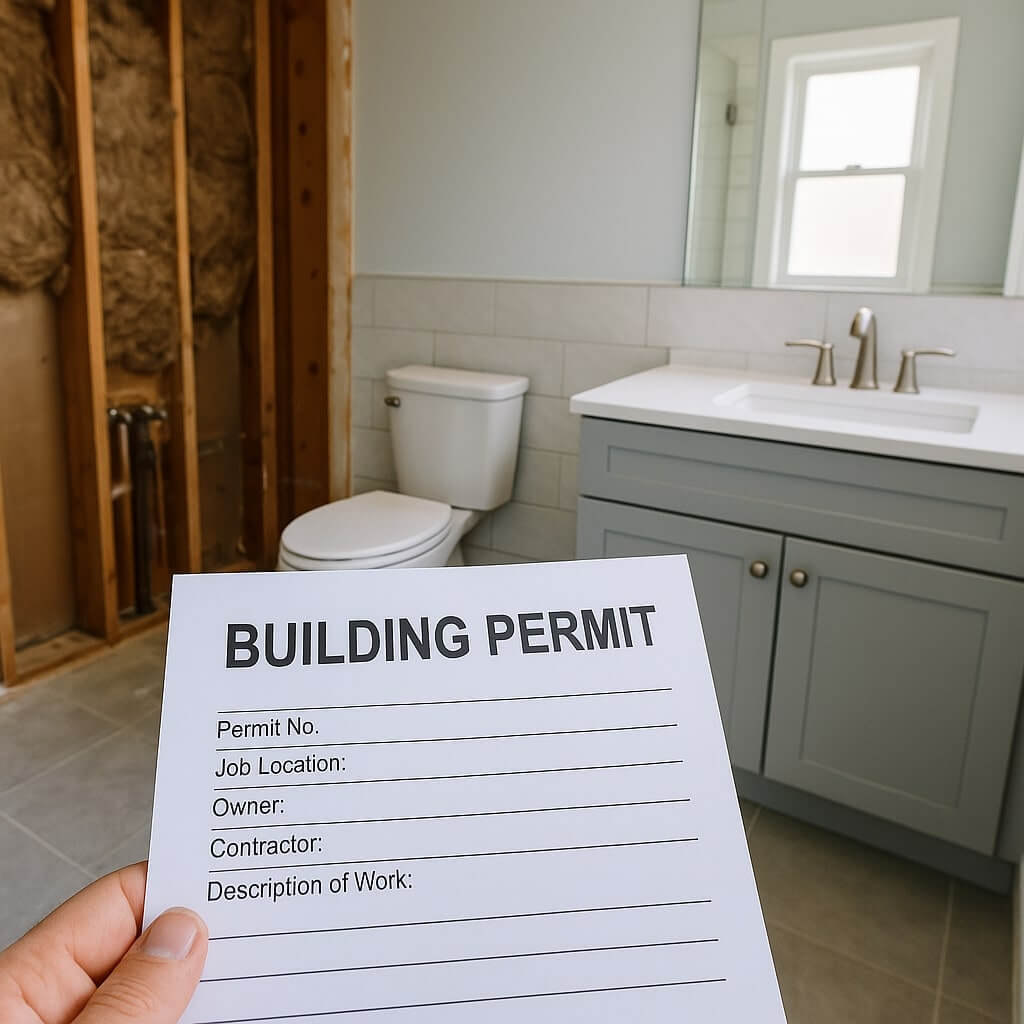
Start by checking your local remodeling guidelines to see what’s required for your project. Gather necessary documents, like plans or sketches, and fill out the permit application accurately.
Submit your application to your local building department, along with any required fees. Be prepared for potential inspections during the remodel to guarantee compliance with safety standards.
Once approved, you’re all set to begin your project! Remember, following the proper steps can save you from future headaches and guarantee a smooth remodeling experience.
Consequences of Remodeling Without a Permit
Opting to remodel your bathroom without a permit might seem like a shortcut, but it can lead to serious consequences down the line.
You risk facing:
- Legal ramifications, including fines or forced removal of work
- Financial penalties that could be more than the permit costs
- Difficulty selling your home due to unpermitted work
- Increased insurance costs or claim denials
- Potential safety hazards that could put you and your family at risk
Don’t underestimate the importance of permits; they protect your investment and guarantee your remodel meets local building codes.
The value of permits cannot be overstated; they safeguard your investment and ensure compliance with local building standards.
Save yourself the trouble by doing it right the first time.
Tips for a Smooth Remodeling Process
While commencing a bathroom remodel can be exciting, proper planning is essential to guarantee a smooth process. Start by outlining your design considerations; think about layout, materials, and fixtures that fit your vision.
Next, focus on budget planning. Set a realistic budget that includes materials, labor, and unexpected expenses. Don’t forget to research local building codes to ensure compliance and avoid hassles later.
Communicate clearly with contractors to align expectations and timelines. Finally, be flexible—remodels often come with surprises.
With these tips, you’ll navigate your bathroom remodel with confidence and ease!
Conclusion
In summary, whether you need a permit for your bathroom remodel depends on the scope of your project. Always check with your local building department to guarantee you’re compliant with regulations. Securing the right permits not only keeps your project on track but also protects your home’s value and safety. Don’t skip this essential step; it’ll save you from future headaches and fines. Happy remodeling!